Bracken Systems

Application

Postflight

Live

Log analysis for modeling improvement and tuning. Postflight reads the binary log after the sortie, in the browser, and turns it into the corrections that go back into the aircraft and into the next plan: what the control loops actually did, where the model and the airframe disagreed, and where the links really held.

Access is by arrangement. Signing in asks for your email and sends a one-time code; if no code arrives within a minute, you are not on the list yet. Email info@brackensystems.com and say what you fly.

Reading a flight, in a minute and a half

Pick the log, the plan it flew and the aircraft. The tiles read the flight by theme, the measured numbers go back to the saved aircraft as one sample per flight, and the next flight is compared against this one.

Silent, captioned. A simulated flight of a made-up mission over the Boulder foothills, planned in Preflight, so nothing in it is a client's data or a real operation.

Planned against actual

The flight is tied to the Preflight run that planned it, so the plan and the log sit on one map and one table.
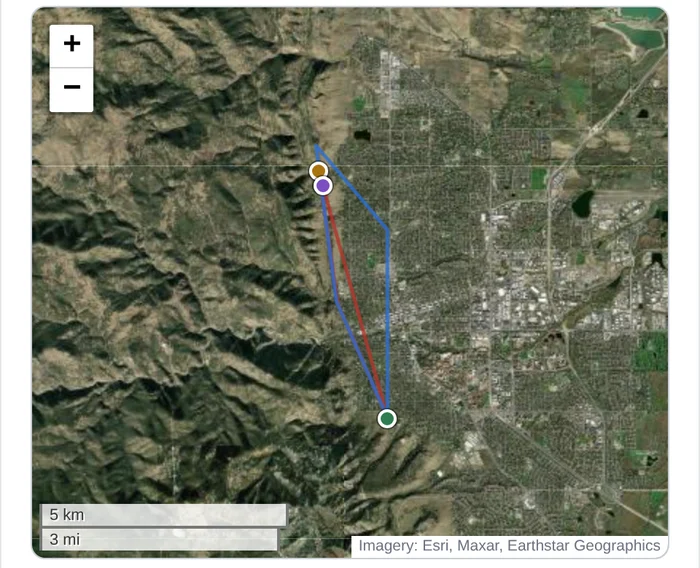
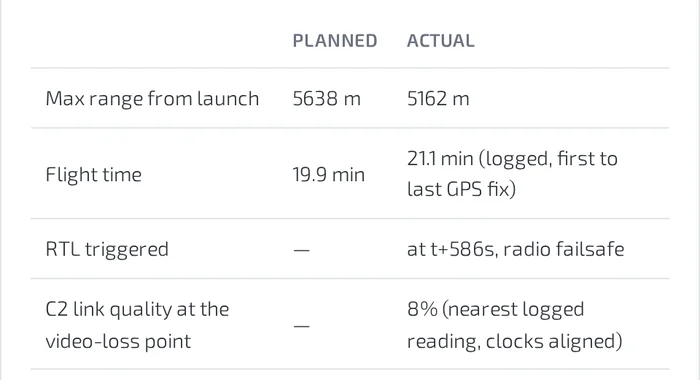
Satellite map with the planned route in blue and the flown track in red, the radio failsafe RTL marked, and the point where video was lost.
The planned route and the flown track, the point where the radio failsafe fired, and where video was lost, marked with one tap on the track.
Table of planned against actual: maximum range, flight time, when the RTL triggered and why, and the control link quality at the video-loss point.
Range, time, the RTL and its reason, and the control link's quality at the moment video was lost, planned beside actual.

What the log says

Read and analyzed in the browser tab, by theme: flight, power, airframe and motors, tune and filters, link. The log itself is never uploaded; only the numbers are, and only when you choose to submit them.
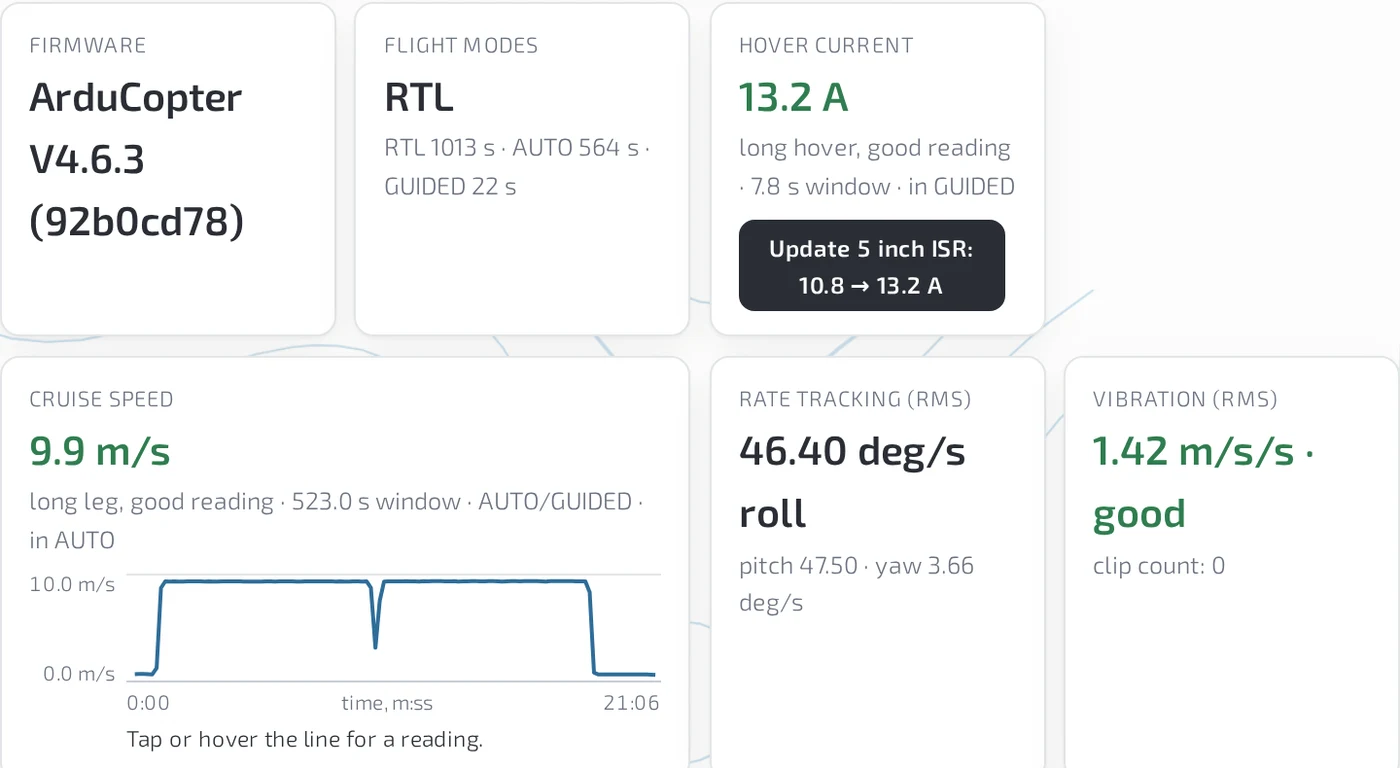
The Tune and filters group of result tiles: rate tracking, the rate controller's P, I and D terms per axis, AutoTune readiness, the notch filter tracking the motors, the harmonic notch on the gyro peak, and the gyro spectrum before and after filtering.
One of the five groups, Tune and filters: rate tracking, the rate controller's P, I and D terms per axis with the strongest D tone, AutoTune readiness against the firmware's own level check, and the gyro spectrum with the harmonic notch measured against the peak it is meant to sit on. Airframe and motors is the group beside it: vibration, hover throttle, motor balance, thrust and motor headroom, the mixer sign, and the ESC telemetry checked against the flight controller's own monitor. Every verdict names its source, the bands that are estimates say so, and marginal is not hidden.
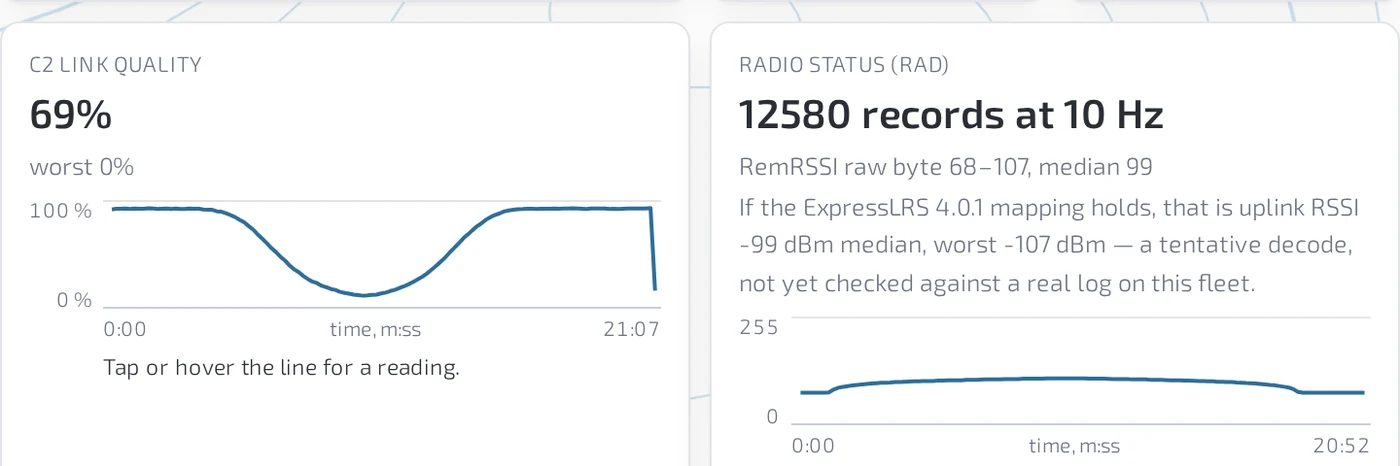
Control link quality over the flight as a trace, beside the receiver's own radio status records.
Control link quality over the flight, and the receiver's own radio status records with the raw bytes kept beside the decode. The Power group replays the battery failsafe from the log and reads the pack's resistance from its sag; the Flight group carries firmware, modes, distance and GPS quality.

Back into the plan, and across flights

Hover current, cruise speed and cruise current go to the saved aircraft as one sample per flight, so Preflight plans on the median with the spread shown. One button fits the aircraft's video and control field loss from its own flights. Each flight is compared with the one before it: the parameters that changed, and what the tiles read before and after, with the aircraft's flights side by side on the entries page.
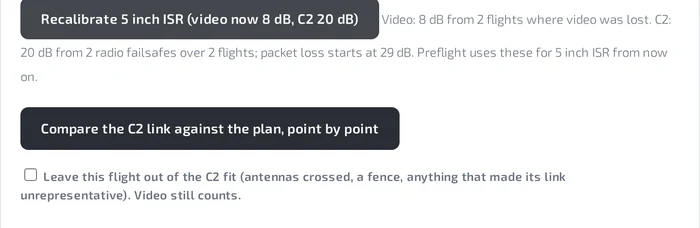
The Recalibrate control for a saved aircraft, naming the figures it produced, with the result beside it: video field loss from the flights where video was lost, control field loss from the radio failsafes that fired, and the point where packet loss starts.
The fit names its method: from a radio failsafe that actually fired, or extrapolated from link quality against the model's margin when none did. It says how many flights it read and how far apart they were.
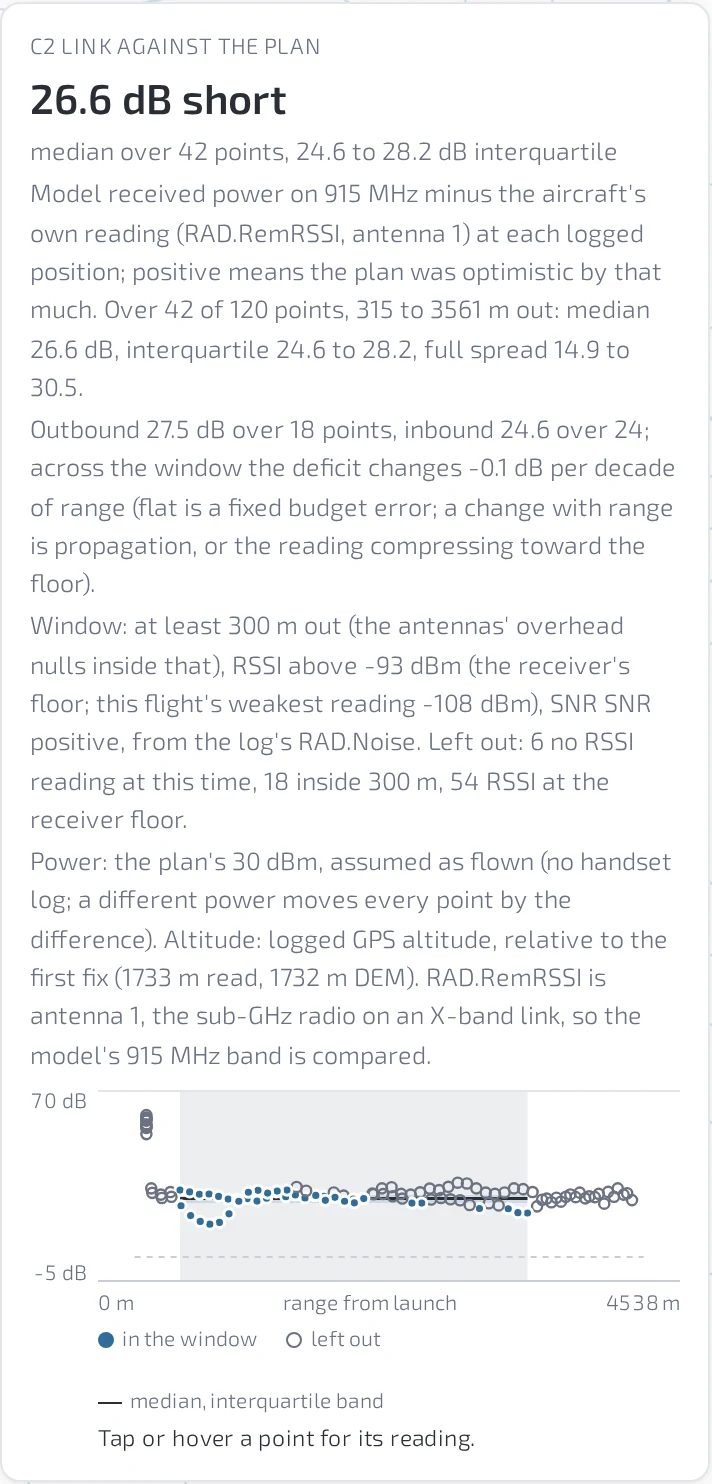
The C2 link against the plan: the model's received power minus the aircraft's own reading at every logged position, as a median with an interquartile band and a scatter of points against range.
The plan's C2 margin against what the receiver actually reported, point by point along the flown track. It names the window it trusts, what it left out and why, and whether the error is a flat budget mistake or changes with range.